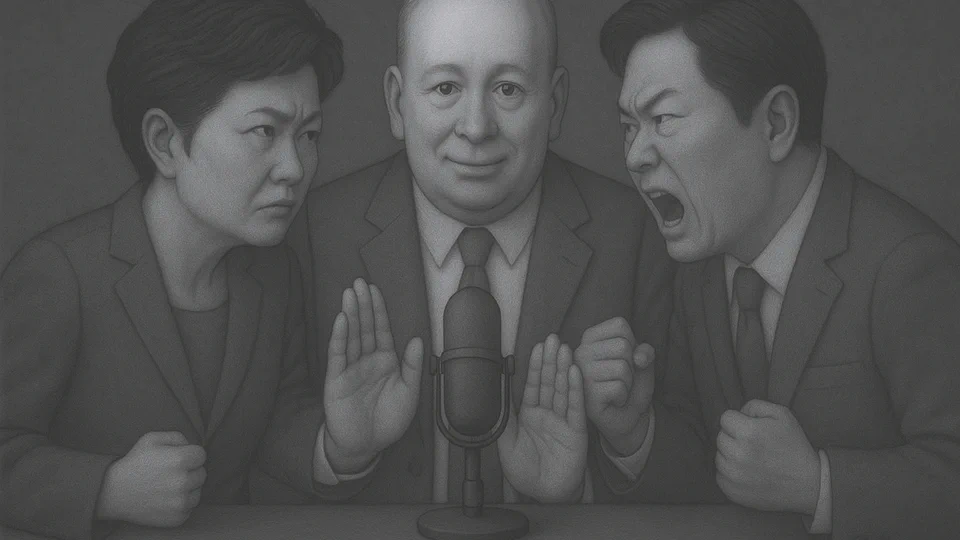
South Korea's political landscape is marred by a history of contentious candidate selection processes, leading to public disillusionment and political instability.
The recent press conference following the tragic midair collision near Washington, D.C., provides a glimpse into a crisis management style we’ve all forgotten.
South Korea stands at a precarious crossroads where economic challenges, security concerns, and shifting diplomatic alliances are converging in ways that could define its trajectory for years to come.
Opinion polls are big in Korea. You can find one to support your views, no matter what they are. Now, this is concerning in itself, and from what I’ve seen, it pays to be pretty skeptical about polls when it comes to gauging public sentiment.
Event or Trend: Pro-Yoon Suk-yeol rallies in Seoul on 18-19 January saw a surge in anti-China rhetoric and conspiracy theories, particularly allegations of Chinese interference in Korea's 2020 general elections. These unverified claims were propagated widely through social media and after repetition by conservative lawmakers have entered mainstream political discourse.
Diplomatic analysis has often been regarded as the domain of hard-nosed realists, relying on historical precedent and strategic interests to shape the world’s most consequential decisions.
South Korea’s conservatives like to change their party name after a f@*k up - and this time, they’ve really f@*ked up.The public is really pissed. Nobody wants this - and soon the economy will start to feel the effects as general strikes spread and investors say WTF? I’m outta here! What confuses most people, is why the party leader would want this - he’s shooting himself in the foot. He will soon be as unpopular as Yoon.
For those outside Korea, it’s hard to imagine that the country’s politics are influenced by centuries-old mysticism. Shamanism (musok), once a cornerstone of indigenous spirituality, has quietly evolved into a shadowy force in modern politics.
The U.S. election campaign brought out three facts about foreign policy: (1) the public no longer supports longheld traditions - republican or democrat; (2) isolationism, albeit a nuanced 21st century form, has returned; and (3) public understanding and appreciation of foreign policy is at an all time low.
Donald Trump's rhetoric and foreign policy actions often highlight America's self-interest at the expense of traditional allies.