South Korean and American political conservatism may wear the same suits and speak the same buzzwords—freedom, security, tradition—but they are fundamentally different beasts.
Lowly schmuck academics like yours truly, unfortunate enough to still be in Seoul at summertime are often invited by public officials to standard fare lunchtime sessions of questioning and soul-searching.
President Lee Jae-myung has dispatched special envoys to the EU, France, UK and India, and now to Poland, Vietnam, Australia, and Germany. The official explanation is that these envoys are meant to “introduce” the new administration, reaffirm diplomatic ties, and share the government’s broad intentions with key partners.
In the North Korea watcher world, where access is scarce and status is conferred by proximity to power or time on CNN, vanity is more than a character flaw—it’s a vulnerability. For analysts, journalists, and policy wonks who dedicate their careers to decoding the Hermit Kingdom, reputation is currency.
Now, with the election of President Lee Jae-myung, the country stands once again on the edge of a familiar cliff, peering down into another cycle of performative engagement.
For a long time, in America, patriotism meant support for Israel. In South Korea, patriotism meant support for America. Both are changing.
The U.S, or at least some of those within influential circles in the U.S, are creeping towards war with China. Preparations are well underway. Australia, Japan, and South Korea, are pushed, prodded, and compelled to line up and play. They’re playing knock and run.
As U.S. attention drifts away from East Asia, the unthinkable becomes thinkable. For decades, South Korea has relied on the U.S. alliance not just for security against North Korea, but as a strategic foundation—anchoring its diplomacy, economy, and identity. But what if the United States decides, not under duress but by design, to pull back?
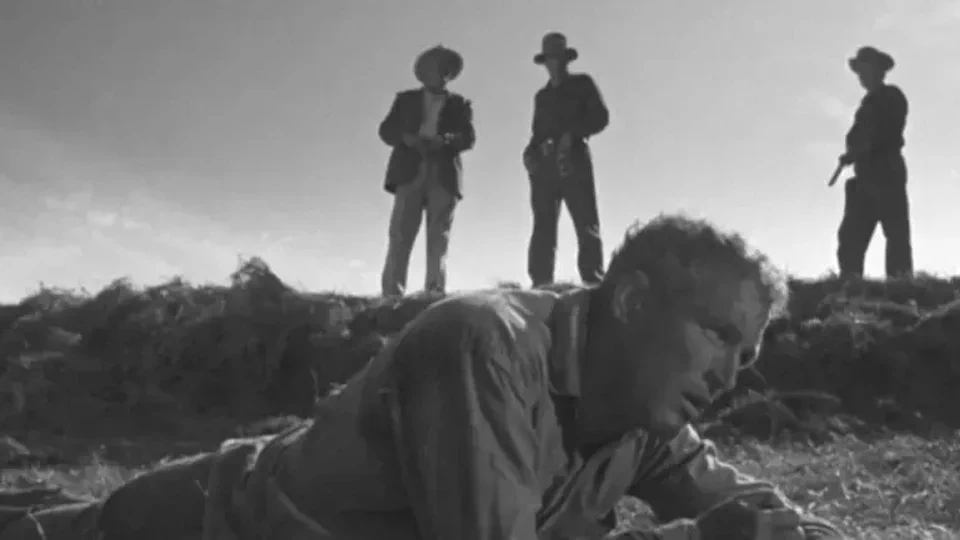
In the film Cool Hand Luke, there's a scene where a prison guard tells Luke he’s sorry for putting him in the box. Luke, bloodied and unbroken, replies: 'Saying sorry don’t make it right.' The moment cuts to the heart of power, communication, and the emptiness of regret when the system remains unchanged.
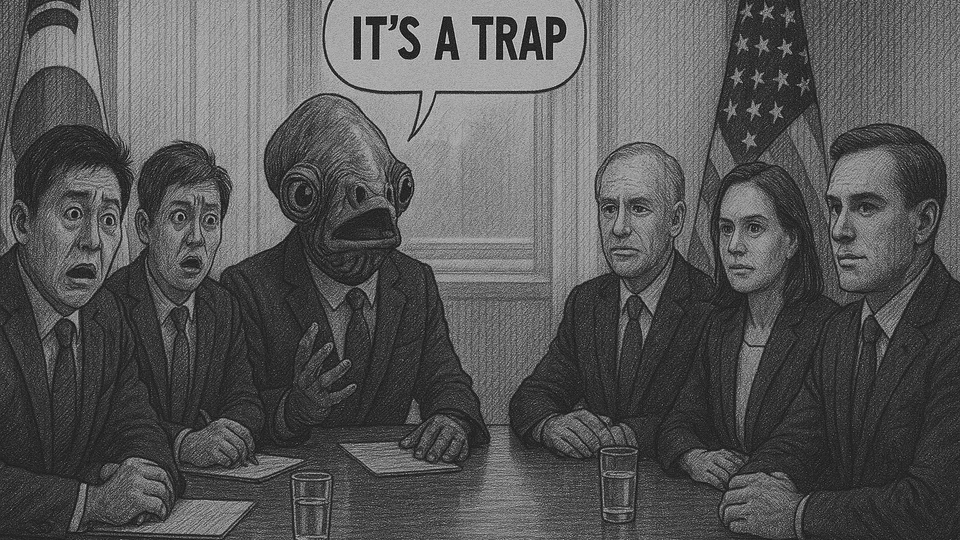
When President Lee visits the White House later this month, it will not be a meeting. To quote Admiral Ackbar—it’s a trap! Seoul shouldn’t just be worried about the immediate outcome but also whether this will be the beginning of the end for the alliance.